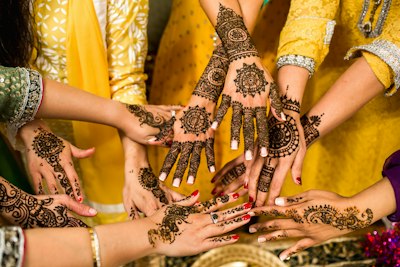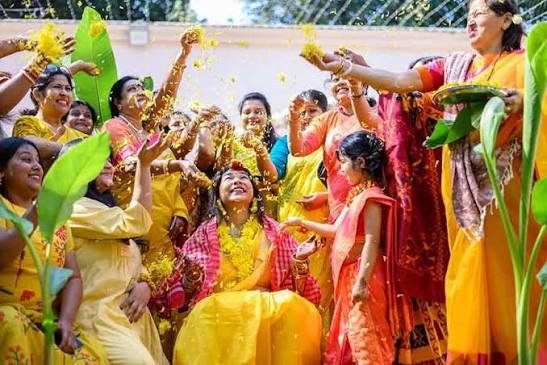
Gaye holud is one of the few wedding functions where the bride's outfit is chosen for comfort as much as photographs — there's turmeric paste, flowers, and a lot of movement involved. Here's how brides across West Bengal & Assam are approaching it this year.
The Bengali Bride: Yellow Silk & Floral Jewellery
A plain or lightly bordered yellow silk or cotton saree remains the classic choice, worn with fresh flower jewellery — a shikha (hair ornament), maang tikka and choker made from tuberose, marigold or rajanigandha. Many brides now opt for a lighter tussar or handloom weave over heavier silk, since the fabric needs to survive turmeric stains gracefully.
The Assamese Bride: Mekhela Chador in Soft Tones
For Assamese gaye holud (locally also tied to the nuoni and other pre-wedding rituals), a pale yellow or cream mekhela chador in muga or cotton is preferred, often paired with gold jewellery in traditional Assamese motifs like the jonbiri and gam kharu, kept minimal so it isn't damaged during the ceremony.
- Choose fabrics that release turmeric stains easily — avoid heavy zari or delicate embroidery
- Fresh flower jewellery over gold for the actual turmeric application, switch after for photos
- Keep a change of blouse on hand — turmeric paste travels further than you'd expect
Bridesmaids and close family typically coordinate in yellow or mustard tones too, so it's worth sharing a rough palette with your bridal party a few weeks ahead so everyone's shopping aligns without looking matchy-matchy.

WedoSouls Editorial Team
Covering weddings, vendors and traditions across West Bengal & Assam.